Quick Summary
The five main pallet racking types each serve different warehouse needs. Selective racking offers 100% pallet access but uses the most floor space. Push-back racking stores 2-6 pallets deep with LIFO rotation. Pallet flow racking provides automatic FIFO rotation for date-sensitive products. Drive-in racking maximizes density for low-SKU, high-volume storage. Pallet shuttle systems combine high density with automation, reducing labor and rack damage. Most warehouses use a combination of systems, matching each storage zone to its operational requirements. The right choice depends on your SKU count, rotation needs, throughput requirements, and available floor space.
The Selectivity vs. Density Trade-Off
Every pallet racking decision comes down to one fundamental trade-off: selectivity versus density.
Selectivity is how easily you can access any individual pallet. A system with 100% selectivity means every pallet is directly reachable from an aisle without moving anything else.
Density is how much inventory you can store per square foot of floor space. High-density systems eliminate aisles by storing pallets multiple positions deep.
These goals work against each other. Every aisle you add for access is space that could hold inventory. Every pallet stored behind another is one you cannot reach immediately.
The third variable is inventory rotation. FIFO (first in, first out) matters for dated products and perishables. LIFO (last in, first out) works when product age does not matter. Understanding these three concepts makes every racking system below easy to evaluate.
Selective Pallet Racking
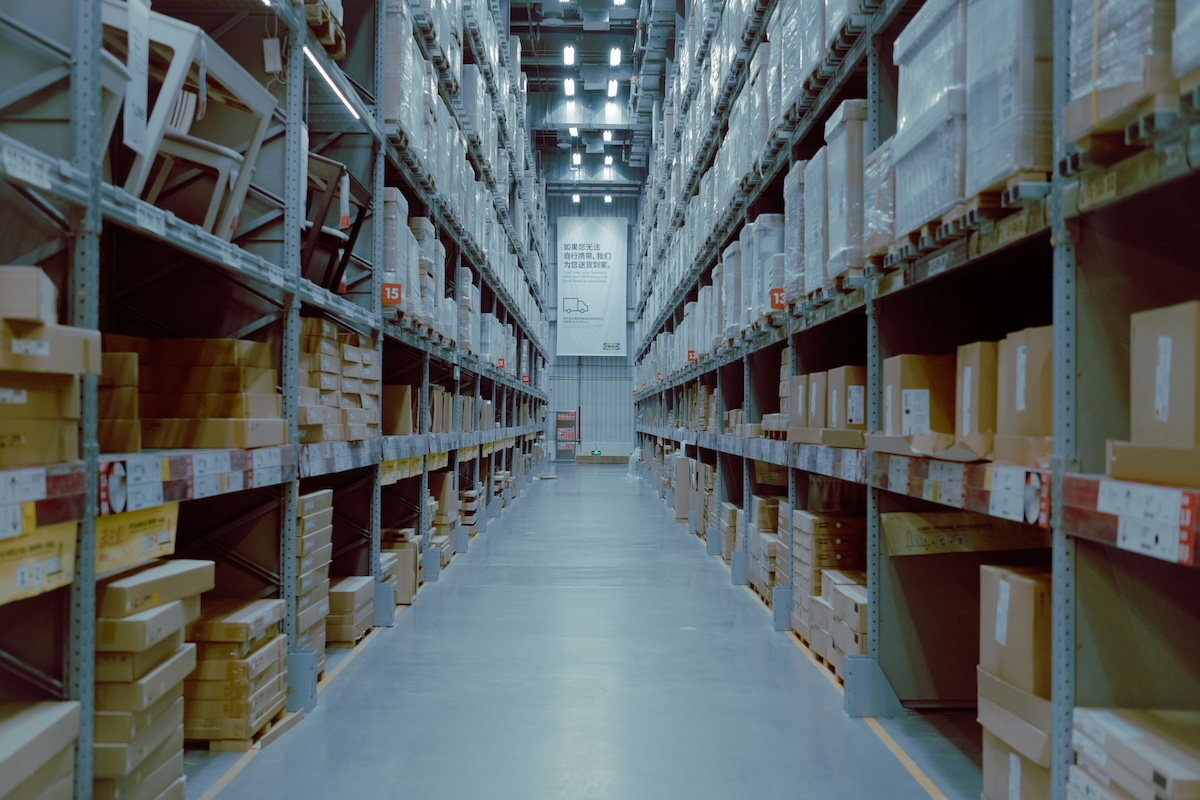
Selective racking is the most common pallet storage system worldwide. Every pallet sits one position deep on a beam and is directly accessible from the aisle. This delivers maximum selectivity, works with any standard forklift, and supports FIFO or LIFO rotation depending on your pick logic.
The trade-off is density. Selective racking requires an aisle for every one or two rows, meaning 45% to 55% of your floor space becomes travel lanes rather than storage.
Selective Racking Configurations
Single-deep: One row of racking accessed from one aisle. Used for wall runs, pick faces, and low-volume areas.
Back-to-back: Two single-deep rows placed spine-to-spine, each served from its own aisle. The standard layout across most warehouse floors.
Double-deep: Two pallets stored front-to-back, accessed with a reach truck. Reduces aisles by roughly one-third while sacrificing direct access to back pallets.
Best For
High SKU counts with few pallets per SKU. Frequent picking. Mixed inventory with varying turnover rates. Operations requiring strict FIFO rotation. Pick-face positions in hybrid storage systems.
Trade-Offs
Lowest density of any system. Requires more forklift travel and labor for high-volume operations. Higher real estate cost per pallet position in expensive markets.
Push-Back Racking
Push-back racking stores two to six pallets deep on nested, inclined carts. Loading from the front pushes existing pallets up and back along rails. Removing a pallet lets gravity roll the next one forward to the pick face.
Because loading and unloading happen from the same aisle, push-back operates on LIFO rotation. It delivers significantly higher density than selective while maintaining access to every lane from a single aisle.
How It Works
Each lane contains nested carts on inclined rails. Placing a pallet pushes all carts behind it back one position. Retrieving a pallet allows gravity to bring the remaining pallets forward automatically.
Best For
Multiple pallets per SKU. Buffering applications. Replenishing pick faces from reserve stock. Operations needing more density than selective without drive-in depth.
Trade-Offs
LIFO rotation only. Higher cost per position than selective due to cart mechanisms. Depth limited to 2-6 pallets. Mechanical components require maintenance.
Pallet Flow Racking
Pallet flow racking uses gravity to move pallets through the system. Loads enter at the high end of a sloped roller lane and travel to the pick face at the low end. Product enters one side and exits the other, delivering automatic FIFO rotation at high density.
This makes pallet flow the system of choice for perishables, dated goods, and high-velocity SKUs in distribution operations.
How It Works
Each lane consists of roller conveyor sections at a 3% to 5% grade. Pallets loaded at the back roll forward by gravity. Speed controllers and brakes regulate flow. Removing a pallet from the pick face automatically advances the next one.
Best For
Date-sensitive products requiring FIFO. High-velocity SKUs. Food, beverage, and pharmaceutical distribution. Operations separating replenishment aisles from pick aisles.
Trade-Offs
Highest cost per position of conventional systems. Requires consistent pallet quality and weight. Must be engineered for specific load characteristics. Longer lanes increase jam risk.
Drive-In Racking
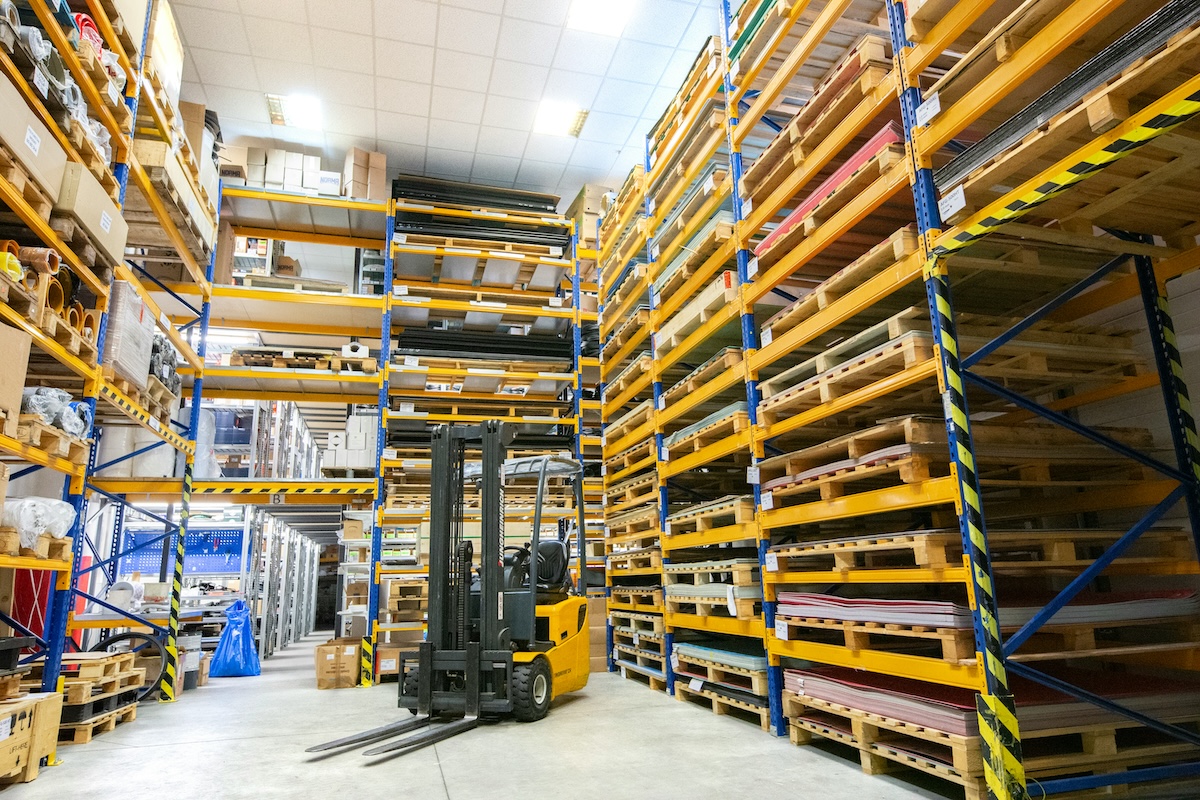
Drive-in racking delivers maximum density for conventional storage. Forklifts drive directly into the rack structure and place pallets on rails, stacking them several positions deep. By eliminating aisles between rows, drive-in achieves 75% to 85% floor utilization.
Drive-through racking is a variation with lanes open on both ends, enabling FIFO rotation but requiring access aisles on both sides.
How It Works
Forklifts enter lanes, place pallets on horizontal rails at each level, and back out. Retrieval works in reverse. Only the front pallet of each lane is accessible at any time, making this a LIFO system.
Best For
Low SKU counts with high pallet quantities per SKU. Cold storage where maximizing cube reduces operating costs. Seasonal storage and bulk raw materials. Finished goods staging.
Trade-Offs
Low selectivity. Only one pallet per lane accessible. Slower throughput than other systems. Higher rack damage risk from forklifts operating inside the structure. Requires skilled operators.
Pallet Shuttle Systems
Pallet shuttle systems combine high-density storage with automation. A motorized shuttle cart travels inside each lane, carrying pallets to and from the lane opening. Forklifts place pallets on the shuttle at the lane face, and the shuttle handles positioning inside the structure.
Shuttles eliminate forklift entry into lanes, preventing rack damage while maintaining drive-in density levels.
How It Works
Battery-powered shuttle carts ride on rails inside rack lanes. Operators direct shuttles via remote control or tablet. Advanced systems integrate with warehouse management software. Shuttles can operate FIFO or LIFO depending on configuration.
Best For
High-density requirements with throughput needs exceeding drive-in capability. Cold storage operations minimizing door openings. Operations seeking to reduce labor costs. Facilities where rack damage from forklifts is a concern.
Trade-Offs
Highest upfront investment. Requires shuttle carts, charging infrastructure, and training. Mechanical complexity adds maintenance requirements. Battery replacement over time.
How to Choose the Right Pallet Racking System
Most warehouses use multiple racking types, matching each zone to its function. Selective at pick faces for fast access. High-density in reserve storage. Flow racking for high-velocity FIFO lanes.
Evaluate these five factors:
SKU count vs. depth per SKU: Many SKUs with few pallets each favor selective. Few SKUs with deep inventory favor drive-in, push-back, or shuttle.
Rotation requirements: FIFO needs drive pallet flow or FIFO shuttle. LIFO works for push-back or drive-in.
Throughput and labor: High pick velocity favors selective, flow, or shuttle. Lower velocity can use dense LIFO systems.
Building constraints: Clear height, column spacing, and fire protection requirements shape what you can build.
Budget and growth: Static systems cost less upfront. Automated systems reduce labor over time. Design for future volumes.
Common Mistakes When Selecting Pallet Racking
Choosing systems before analyzing operations. Start with your SKU profile, throughput, and constraints before evaluating racking types.
Designing for current volumes only. Racking lasts 15-20 years. Build in growth capacity.
Ignoring total cost of ownership. Factor in forklift requirements, labor, maintenance, and space utilization.
Neglecting fire protection requirements. High-pile storage regulations affect what you can build. Engage fire protection engineering early.
Underestimating installation complexity. Dense systems require precise installation. Qualified installers matter.
Frequently Asked Questions
What is the most common type of pallet racking?
Selective pallet racking is the most common system worldwide. It provides 100% pallet selectivity, works with standard forklifts, and accommodates high SKU counts with varying turnover rates.
What is the difference between FIFO and LIFO racking?
FIFO (first in, first out) retrieves the oldest inventory first, essential for dated products. Pallet flow and FIFO shuttle systems provide this. LIFO (last in, first out) retrieves the newest inventory first. Push-back and drive-in systems use LIFO.
Which pallet racking system has the highest storage density?
Drive-in racking and pallet shuttle systems offer the highest density, achieving 75-85% floor utilization compared to 45-55% for selective racking. Shuttle systems add automation benefits without the rack damage risk of drive-in.
Can I combine different pallet racking types in one warehouse?
Yes. Most well-designed warehouses combine systems. A typical approach uses selective racking at pick faces, high-density systems for reserve storage, and flow racking for high-velocity FIFO lanes.
How long does pallet racking last?
Quality pallet racking lasts 15-20 years or longer with proper maintenance. Lifespan depends on forklift damage, load weights, environmental conditions, and whether the system was properly engineered for the application.
The right pallet racking system depends on your operation, not just your building. Work with a systems integrator who analyzes your SKU profiles, throughput requirements, and growth projections before recommending solutions.